
Based in Barrow and supporting communities across South Cumbria, the organisation provides a wide range of services, from emotional and wellbeing support to confidence building, young people’s services and health projects.
For our first Member Spotlight, we spoke to Hayley about its creative cancer awareness work, the value of trusted community organisations and the difference working with Spring North has made.
Tell us about Women’s Community Matters and the communities you support
Women’s Community Matters was set up in 2013 originally as a domestic abuse charity, but our work has developed over time in response to what women in our communities need.
There has always been demand for health and wellbeing support alongside domestic abuse services. We provide person-centred emotional support, one-to-one help and a range of open-access and focused groups covering areas including relationships, confidence building and wellbeing.
Somebody once described us as a one-stop shop for women and that has always stuck with me because there really is something for everyone.
We are based in Barrow, but our reach extends across South Cumbria. We also provide telephone support and we have strong partnership links across the county.
How did you first become involved with Spring North?
We had previously received funding through Spring North for a mental health project, so there was already a relationship there.
Last year, an opportunity came up to develop some cancer awareness work. We had already been thinking about expanding the health and wellbeing side of what we do because mental and physical health are so closely linked.
Cancer awareness was quite different from anything we had delivered before, but it also fitted naturally with what we already do, which is getting important health messages out to women in ways that feel accessible and relevant.
Your cancer awareness work has been incredibly creative. Why have you chosen that approach?
Creativity has always played a part in what we do.
We run creative activities within the centre because we know they have benefits for health and wellbeing, but they also give people something to do while they talk. Conversations can happen far more naturally when people are making something together.
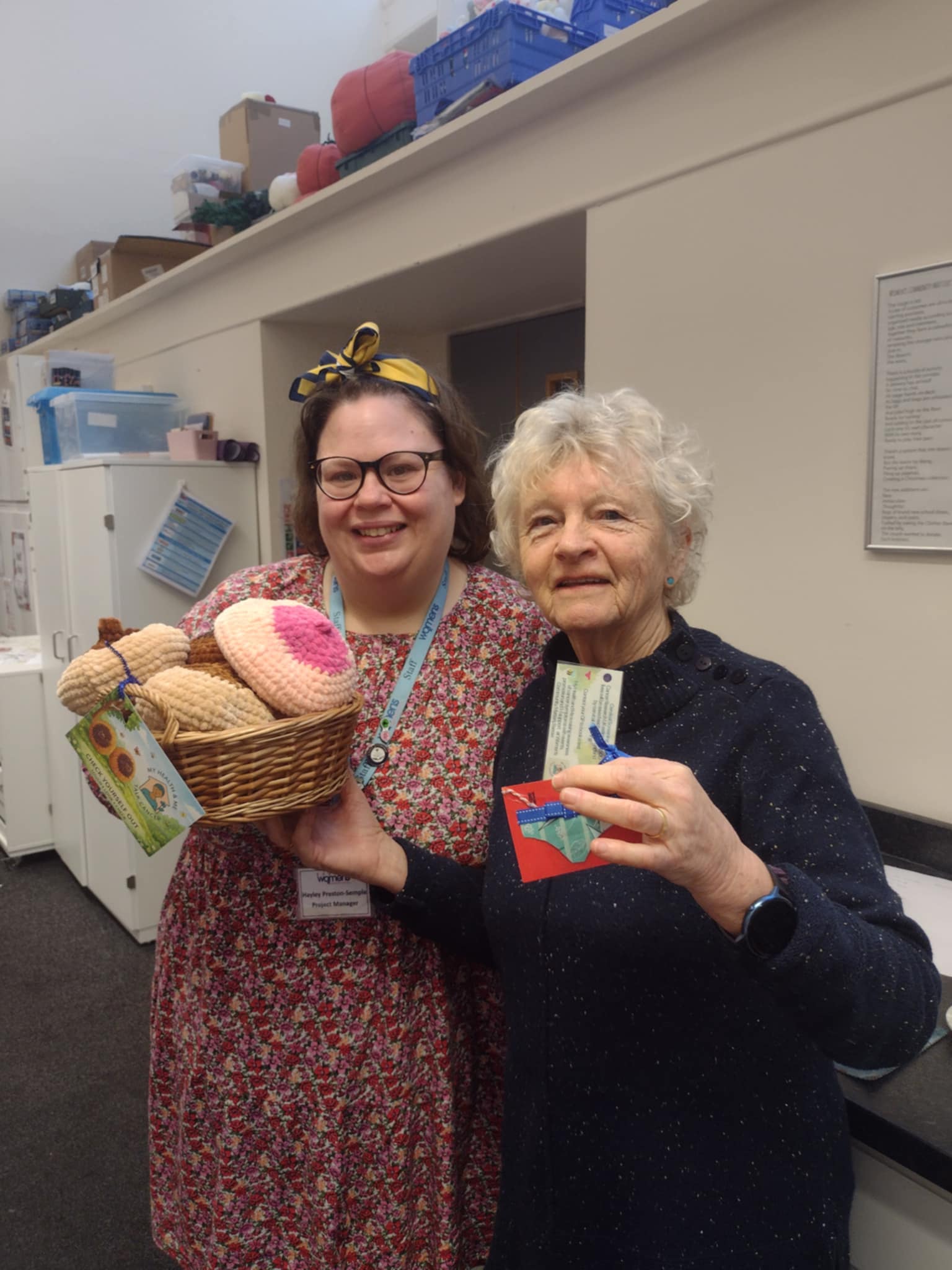
I had previously seen a cervical screening campaign using handmade pants that were displayed in toilets and thought it was a brilliant way of getting an important message across in an eye-catching and less intimidating way.
We started making them in some of our groups and the conversations just happened naturally.
If you walk into a room and announce that everyone is going to talk about cancer, people may immediately switch off. But if you introduce it through something creative, people become curious and start talking.
Can you tell us about one or two activities that have made the biggest impact?
The pants campaign has been really successful, but the crocheted breasts have probably become our biggest conversation starter.
They were originally created so people could feel what a lump might be like. Now I take them whenever we go out to deliver health and wellbeing awareness activities.
People see them, ask what they are and suddenly you are having a conversation about breast awareness and checking for changes without it feeling forced.
We have also created other items to help us talk about different parts of the body and different types of screening. A big part of the work is making people more comfortable talking about things that can otherwise feel embarrassing or taboo.
Have you seen examples of people taking positive action because of your work?
Definitely.
Women will stop me in the centre and tell me they have been for cervical screening or that they have checked their breasts.
We have also had women tell us they went to their GP about something they were concerned about and that they might not have done that previously.
That is probably the clearest sign that the work is having an impact. The message we keep reinforcing is that if something does not feel right or you are unsure, get it checked.
What difference has working with Spring North made to your organisation?
We have been really well supported by Spring North throughout the project.
Without that support, we would not have been able to deliver the work in the same way or reach as many people with these messages.
There is also real value in being connected with other organisations across Lancashire and South Cumbria. Our regular meetings give us opportunities to hear what other organisations are doing, share ideas and learn from one another.
That sense of bringing people together is really important because it helps everybody improve what they are doing in their own communities.
Why are community organisations so important in improving health awareness?
Community organisations are already embedded within the communities they serve.
We have the opportunity to really get to know people, understand what matters to them and recognise the approaches that are likely to work.
Trust is a huge part of that.
People often feel comfortable talking to us about things they might be reluctant to raise elsewhere because they already know the organisation and they know they are not going to be judged.
When we go into another community organisation, that trust can transfer too. If people trust the organisation that has invited us in, they are often more willing to engage with us and have those conversations.
What advice would you give other organisations wanting to deliver similar projects?
Don’t be afraid to try something.
There are so many health subjects that people can feel uncomfortable talking about, whether that is cancer, menopause or different parts of the body. Sometimes the biggest barrier is simply having the confidence to begin the conversation.
We are not medical professionals and we do not pretend to be. Our role is to create a safe environment where somebody can say something does not feel right, and then encourage them to speak to the appropriate health professional.
If people know you are comfortable having those conversations, they are more likely to come to you when they need that extra encouragement or support.
What are your ambitions for the future?
We want to keep the momentum going.
Having a dedicated focus on cancer awareness has taught us a lot, but many of those messages link naturally into wider health and wellbeing.
Our next focus is around making small changes that can make a big difference to people’s health.
We also want to keep building that sense of doing things together. Making positive changes on your own can feel isolating, whereas doing it as part of a group creates encouragement, support and a sense that you are all working towards something together.
Ultimately, we want to continue improving women’s health and making sure it receives the attention it deserves.

If you need help or guidance, our team are available to help!